







The modern game of golf has expanded beyond traditional outdoor courses into highly immersive digital environments. The indoor golf simulator has become a central training and recreation tool for players seeking year-round consistency and data-driven improvement. These systems rely on fast-processing sensors, high-resolution visuals, and real-time feedback that translate physical movement into detailed performance metrics. Because so much of this experience depends on visual interpretation, clarity of sight becomes an important factor in how effectively a player engages with the simulation.
Visual Demands of the Indoor Golf Simulator
A modern indoor golf simulator is designed to replicate real-world golfing conditions through a combination of projection systems, tracking cameras, and analytical software. It renders ball flight, spin, launch angle, and course layout with a level of detail that requires rapid visual processing. Unlike outdoor play, where natural depth cues and environmental context assist perception, simulator environments compress all information into a controlled visual interface.
Players must interpret layered data such as trajectory arcs, landing predictions, and terrain gradients, often presented simultaneously on screen. Even small delays in visual interpretation can affect how a player understands shot quality or makes adjustments between swings. As a result, visual clarity becomes not just helpful but essential for extracting meaningful insight from each session.
The Role of the Optometrist in Visual Interpretation
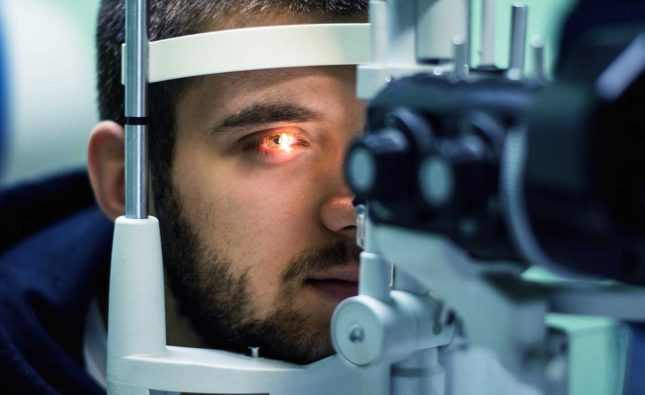
Within performance-based simulation environments, the optometrist is often associated with maintaining the clarity and precision of visual input. While the focus is not on treatment or correction in this context, structured visual evaluation helps ensure that players can engage fully with detailed digital feedback systems.
The indoor golf simulator environment places unique demands on visual coordination. Users must shift attention between near-field data displays and the simulated perception of distance and depth on screen. This requires the visual system to manage contrast sensitivity, motion tracking, and focus transitions at a rapid pace.
When these visual elements are not well aligned with the demands of the simulator interface, interpretation can become less efficient.
Translating Visual Clarity into Real-Time Performance Data
One of the defining strengths of the indoor golf simulator is its ability to convert physical motion into immediate, highly detailed feedback. Each swing generates a stream of data points, including club speed, face angle, launch direction, and carry distance. These metrics are often displayed alongside a visual representation of the shot, allowing players to compare intent with outcome.
For this feedback loop to be effective, the user must be able to quickly and accurately connect visual cues with numerical results. Sharp visual interpretation helps reduce the cognitive delay between seeing a result and understanding its meaning. This is especially important when making incremental adjustments between swings.
In this environment, clarity of vision supports the overall learning process. The simulator provides the data, but the player must visually integrate that data into actionable understanding.
Maintaining Consistency Across Digital Practice Sessions
Consistency is a key objective in both traditional golf and simulator-based training. The indoor golf simulator offers controlled conditions that eliminate external variables such as wind, uneven terrain, or weather changes. However, the visual environment itself can still vary depending on screen brightness, projection quality, and session duration.
Over time, extended exposure to detailed visual interfaces can place continuous demands on focus and attention. Maintaining stable visual interpretation helps ensure that performance trends reflect true skill development rather than fluctuations in perception.
The optometrist plays a key role in supporting visual accuracy. While often associated with routine eye examinations, their relevance extends into any activity that depends on fast, precise visual interpretation. The goal is to help ensure that the visual information being presented by the simulator is perceived as clearly and consistently as possible.
As golf continues to evolve through technology, the indoor golf simulator has become a powerful tool for analysis, repetition, and skill refinement. Its effectiveness depends heavily on the player’s ability to interpret dense visual data and respond in real time. Within this framework, the role of the optometrist is connected to the broader importance of visual clarity in high-performance environments.
Ultimately, success in simulator-based training is not only about swing mechanics or equipment familiarity, but also about how clearly and efficiently the visual system processes information.